
Three Simple Smoothies for Eye Health
It’s not always easy to eat right – we get it. With our busy on-the-go lifestyles, it’s sometimes hard to ensure that you’re getting the recommended daily intake of fruits and veggies. Eating well is important for your overall health, including your eyes, so it’s important for you to make the effort and get the things that your body needs to operate properly. Smoothies are an easy, quick and delicious way to make sure you get your daily nutrients, so here are some fruits and veggies you should be adding to your smoothies to ensure optimal eye health.
Avocados
Avocados are packed with health benefits, mostly known for being low in sugar and high in healthy fats, but did you know that they also contain high concentrations of lutein? One ounce of avocado contains over 81 micrograms of lutein. Lutein is a powerful antioxidant that helps prevent macular degeneration as we age and research shows that our bodies do not synthesize the lutein it needs and require us to supplement this requirement by consuming healthy nutrient filled foods. To add more avocados to your diet, try this delicious Avocado Superfood Smoothie.
Avocado Superfood Smoothie

Serving: Two glasses
Ingredients:
- 1 Hass avocado
- 1 1/2 cups of frozen blueberries
- 3 strawberries (without stems)
- 17 mint leaves
- 1/2 cups of organic orange juice
- 1/4 cup plain yogurt
- 2 tablespoons agave nectar
- 1/2 Cups frozen raspberries
Directions: Slice and pit the avocado. Discard the pit and skin by scooping out the flesh with a spoon and placing it into a blender. Add the remaining ingredients into the blender, leaving two of the mint leaves as a garnish. Blend until smooth; add additional juice or water to adjust consistency. Pour, garnish and enjoy!
Blueberries
Most berries have some nutritional value, but blueberries raise the health benefit bar to a whole new level. As one of the healthiest foods for your eyes, blueberries are rich in vitamins and nutrients that can help prevent impaired vision and blindness containing high concentrations of:
Vitamin C: vitamin C helps to protect your body against free radicals, which can damage our eyes and lead to the development of various diseases. It also aids in eye health by reducing intraocular pressure, a common cause of glaucoma, and protects the optic nerve. Vitamin C also aids in the prevention of macular degeneration by maintaining the health of connective tissues in the eye. One cup of blueberries contains 14 milligrams of vitamin C.
Vitamin A: blueberries are also loaded with vitamin A, another antioxidant that aids in the prevention of damage caused by free radicals. Not only does vitamin A protect the eye from degeneration and disease, but it also reduces inflammation and works to relieve dryness.
Vitamin E: vitamin E actively works toward the prevention of cataracts, when the lens of the eye becomes cloudy and impairs vision. Cataracts are a common problem that develops with age. Consuming adequate amounts of vitamin E can help slow this process down.
Anthocyanins: blueberries also contain anthocyanins, another kind of antioxidant that is beneficial for the maintenance of eye health. This antioxidant is particularly beneficial to people living with diabetes as it can reduce damage caused by inflammation and help prevent diabetic retinopathy.
Zinc: zinc is an especially important mineral as it helps our bodies absorb other vitamins more effectively. Zinc also protects our eyes from developing night blindness and macular degeneration as we age. A cup of blueberries contains 0.24 milligrams of zinc.
To benefit from numerous eye health benefits of blueberries, try this delicious Berry Green Smoothie.
Berry Green Smoothie
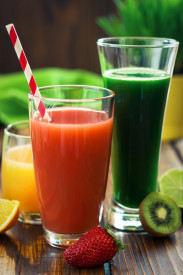
Serving: Two
Ingredients:
- 1 cup spinach leaves
- 1/2 cup frozen blueberries
- 1/2 cup frozen raspberries
- 1 ripe banana
- 1/2 cup milk
- 2 tablespoons old fashioned oats
- 1 tablespoon sugar
Directions: Combine all ingredients in a blender, blend until smooth. Add water to adjust consistency, add sugar to taste.
Carrots
Carrots, like blueberries, are great for your eyes because they are jam-packed with vitamin A. On top of being a powerful antioxidant, vitamin A helps create a barrier that protects the eye from bacteria and viruses, helping to prevent disease and infection. According to the National Eye Institute, people who consume vitamin A daily (along with vitamin C, vitamin E, zinc and copper) reduce their risk of developing macular degeneration by 25%. To incorporate carrots and other eye healthy ingredients like apples and ginger, try this Apple, Carrot and Ginger Smoothie.
Apple, Carrot and Ginger Smoothie

Serving: One
Ingredients:
- ½ cup apple juice
- 2 large carrots, peeled and chopped
- ¼ cup applesauce
- ¼ tsp finely grated fresh ginger
- 1/8 tsp ground cinnamon
- 1/8 tsp kosher salt
- 4-6 ice cubes
Directions: Wash, peel and chop up the carrots and ginger. Add all the ingredients into the blender and blend until Smooth. Add additional juice or water to adjust the consistency of the smoothie and enjoy.
These three smoothies for eye health are not only great for your vision; they’re so delicious, you’ll be looking forward to them. For more information on eye health, contact us.
LASIK Surgery Helping Soldiers Stay Safe
We all rely on our vision to lead productive and happy lives. Now consider the significance of clear vision for astronauts, first responders and our US Military personnel. If you ever wondered whether having LASIK surgery was safe for you, rest easy because LASIK is not only acceptable but recommended.
LASIK is Safe for the US Military
Our Army, Navy and Marines on the frontlines can find themselves in life and death decisions on a daily basis, so good vision is critical to their safety. They are given the best equipment to do their jobs, and it has been deemed that LASIK surgery is not just cosmetic surgery, but a “gear issue.”
Wearing glasses and contacts negatively affect their ability to see the enemy. They have incredibly advanced technology with night scopes, drones, but all dependent on the human component.
After a decade of positive laser vision correction surgery results from the civilian population, the military performed extensive testing to ascertain its compatibility with members of the armed forces.
One such study was the Army Warfighter Refractive Eye Surgery Program. Over 16,000 Army service members had LASIK over a three year period. Their purpose was to establish and reduce the limitations of corrective eyewear in combat.
The results of the study concluded:
- The program provided excellent outcomes
- LASIK surgery enhanced their overall readiness
- Night vision difficulties, dry eye and flap complications were rare
- 85.6% had better than or equal to 20/20 vision
Now naval aviators, soldiers, and marines choose LASIK for its safety and effectiveness.
Final Frontier for LASIK – Safe for Astronauts
Space travel requires extreme precision during flight and space walks, NASA wondered how the environmental extremes of space would be affected by LASIK surgery. Dry air, weightlessness, G forces, and high altitude are just some of the challenges our astronauts face.
After extensive clinical date was reviewed, it was determined LASIK surgery provides both safety and the quality of vision needed for our NASA astronauts now and in the future.
First Responders
Fireman, police, EMT, all are first on the scene of an accident, tragedy or weather event. Charging into a smoke filled burning home, chasing down a criminal, or saving a life requires good vision. There is no time to find a pair glasses or look for a lost contact lens. It requires perfect vision at a second’s notice. That is what you have with LASIK surgery.
The Good News
The good news is this amazing procedure is available for you too! You may not be on the front lines, or rushing into burning buildings, but good vision is essential for everyone.
LASIK on the frontlines, LASIK in space and LASIK for first responders.
Safe enough for them, safe enough for you.
Find out if you are a good candidate for laser vision correction. Contact the eye care professionals at Cedar Park Vision and schedule your FREE LASIK consultation.
Checklist before Your Laser Eye Surgery
While it has become quite common in recent years, laser eye surgery can still be daunting and elicit feelings of nervousness. To ensure you are at your best on the day of the procedure, follow these steps for a calm and smooth day. Since no one likes to be frazzled, this is a great checklist before your laser eye surgery that you should keep in mind.
Contact Lenses:
Stop wearing them. While it might hinder your aesthetic appeal, discontinuing the use of your contact lenses a few weeks prior to the surgery, and switching to full time wear of your glasses is in best practice. Since contact lenses can distort the shape of your cornea, any measurements that were taken might be slightly altered with continued use of the lenses. This could potentially lead to a poor surgical outcome, which is not desired in any situation. While your doctor will give you specific instructions, discontinuing your usage of contact lenses should happen a few weeks before the date.
Makeup:
A few days before, and especially on the day of the surgery, completely avoid using eye makeup, and/or creams that might be applied near the eye area. You might also be asked to clean your eyelashes daily, as to eliminate any chance of debris or bacteria falling into your eye. Avoiding infection is important, so minimizing the use of foreign substances will help you maintain healthy eyes before and after the surgery. Additionally, you will most likely be asked to not wear any perfume or heavily scented lotions, creams, fabric softeners, hair sprays, mousse, or after-shave, all of which contain alcohol.
Clothing:
Wear comfortable, easy to remove clothing on the day of your operation. Avoiding fabrics such as fleece or wool is best, as these fabrics tend to shed lint, which can potentially get into your eye.
Transport:
You will need to have someone drive you home after the surgery, so arranging this beforehand will be extremely beneficial. You may still feel the effects of the medicine given to you during the surgery, and your vision will most likely still be blurry. Having a last minute scramble to find a ride might not work out, and is an added stress that you should not have to deal with. Arrange your transportation in advance, for a peaceful post-surgery recovery.
Consumption:
There are generally no restrictions on the food or medicine you can have prior to the surgery, but informing your doctor about which medication you are on is important. Also, avoiding alcohol the night before, and the day of the surgery is advisable as alcohol tends to dehydrate the tissues, which can delay the healing process.
Following this checklist before your laser eye surgery will help you in feeling calmer and more prepared on the day. Contact us for more information on LASIK.
How Blue Light Affects Your Eyes
There’s no doubt about it – we are all addicted to our electronics and can’t seem to get enough screen time. What we don’t often pay attention to is how staring at a screen, whether it be a tablet, computer or phone, impacts our eyes. While having the world at our fingertips is truly amazing, the health concerns that come with this technology are becoming apparent. Here is how blue light affects your eyes, and how to ensure safe screening.
Digital Eye Strain:
Continual screen time can affect your eyes in two ways. The first most common and harmful effect is digital eye strain. While we are looking at a screen, our blink rate drops significantly. We naturally blink around 15-20 times a minute. When we stare at a screen for extended periods of  time, this number drops quite a bit, resulting in dryness and eye irritation. Often, we experience slightly blurry vision after having looked at the computer screen all day. This blurred vision is a side effect of digital eye strain, and it’s a way your eyes are telling you that they have been overworked. Many people get headaches after staring at a screen for too long, or their eyes feel dry, runny, and fatigued. While digital eye strain is temporary, it can lead to a chronic problem if left unaddressed and unmonitored. So many of us have adapted this into a natural part of our everyday routine that it often goes unnoticed and we are not concerned about these signs.
How to Counter DES:
The easiest and fastest way to relieve your eyes from digital eye strain is to actively pay attention to your eyes and blink more. Blinking lubricates your eyes, and helps them stay sharp throughout the long workday. The 20-20-20 rule is also a great way to help relieve your eyes and help them refresh. Every 20 minutes, stare at something 20 feet away for 20 seconds. This will help your eyes refocus and give them a break from the bright lights of your screen.
Blue Light Exposure Damage:
The second and more intense concern is blue light exposure damage. The problem with blue light is that it is the strongest form of light, as it is the highest energy wavelength of visible light. This kind of light has the ability to penetrate all the way to the back of the eye. It goes through the eye’s natural filters whereas other lights don’t. While occasional exposure to blue light is okay, the fact that we are constantly absorbing it can lead to macular degeneration, causing serious problems. Children are most at risk for developing ocular problems, as their eyes have yet to fully develop, and gain the protective pigment that helps filter out some of the harmful blue light. Limiting your child’s screen time is the best way to ensure they are protected against this. Adults are also susceptible, and especially so with the way we use our smartphones and laptops.
How to Prevent BLED:
To prevent damage from occurring, one of the best ways to help yourself is to limit screen time before bed. Studies have shown that blue light exposure interrupts our REM cycle of sleep. Reducing blue light exposure a couple hours before bed helps as this type of light is known to suppress melatonin and delays deep REM sleep from taking place. There are also lenses available to help block blue light absorption, and they are available for both adults and children. Speaking to your eye doctor about this will greatly benefit your whole family.
Taking a proactive approach in understanding how blue light affects your eyes will be helpful to you in the long run. Your eye health, productivity, moods, and sleep will thank you! Contact us for a consultation.
Caring for Your Children’s Eyes
Taking your child to the doctor for checkups is a routine you generally don’t miss – caring for your children’s eyes should fall within those responsibilities as well. The health of your children’s eyes is extremely important – here are some ways in which you can ensure you stay on top of helping them maintain good eye health.
Eye Doctors
Scheduling time for eye doctor checkups is equally as important as regular doctors. Eye infections, vision problems, or any diseases can be detected early on and can thus be treated effectively. There are different doctors with different names, and knowing the difference will make it that much easier to know what’s right for your child.
Eye Exams
 Knowing when to schedule those eye exams and what to check for will help in keeping your children on the right track. Newborns should be checked in the hospital by a family physician or pediatrician for general eye health. Those newborns who are high-risk, premature or who have a history of eye problems should be given some extra care when being checked and should have an eye doctor conduct the exam.
Throughout their first year, infants should be screened regularly by their pediatrician. Ages 3.5 and up should be regularly checked by an eye doctor for eye health, acuity, alignment and if there is a possibility of needing prescription glasses.
Eye Drops
Allergy season can pass by without any hiccups, or it can wreak havoc on your home. If your children suffer from allergies to pollen, hay,  grass, dust, or any other allergens in the air, it will be beneficial to you both to be proactive in getting them eye drops that work for them. If you are unsure whether your child will get affected by allergy season, look out for red eyes, itchy eyes, and sneezing.
If you notice these symptoms, consult your eye doctor and get the right drops for your kid. Often, over the counter drops will do the trick. Be diligent in applying them as per the box instructions, and for kids who are old enough, showing them how to do it themselves will help them while they are at school/playing outside.
Eyewear
As kids get older, eye wear might become a necessity. If your child has a prescription, they will need glasses for either all the time or sometime use. Children age 10 and up might opt for contact lenses, so teaching them how to properly put in their lenses and take them out is essential in maintaining the health of their eyes. Kids who are active and play sports might need protective eyewear, so researching what is right for them and getting them properly equipped is also a necessity. With your diligence, they will learn the importance of maintaining and caring for their eyes, a habit that will transgress into their adult years.
Caring for your children’s eyes is an important part of their overall health. Get them into the right routine, and don’t forget to keep the carrots coming! Contact us for booking appointments.
Makeup Tips for Girls with Glasses
You shouldn’t have to choose between wearing glasses and feeling beautiful. Not wearing your prescription glasses can cause strain to your eyes resulting in headaches and discomfort. Here are some ways you can make your makeup and glasses work together in perfect harmony!

Use Mascara
It is a common belief that you shouldn’t wear mascara when using your glasses in case it transfers or sticks to the lens. This can easily be avoided by simply waiting for your mascara to fully dry before putting your glasses back on. Watery eyes? Try using waterproof mascara to help it stay in place all day. Mascara is a great way to make your eyes appear larger and well rested. To avoid emphasizing any shadows that may be casted from your frames, it is best to skip the mascara on the lower lashes.
Curl Your Eyelashes
Before applying your mascara (or if you decide to go without), you must never forget to curl your eyelashes. This is one of the simplest steps with the greatest impact. Not only does curling your eyelashes make them look noticeably bigger, but it also prevents them from poking at your lenses. This is especially true for those of you with straighter lashes.
Keep Your Liner in Scale
Eyeliner is great for making your lash line appear fuller and for framing your eyes. There are so many creative ways you can express your personal style with eyeliner, just because you’re wearing frames, doesn’t mean what’s underneath doesn’t matter. One thing to keep in mind when using eyeliner while wearing glasses is size, it’s important that the combination looks balanced. As a simple guide: If you wear thicker frames, you can afford to go thicker and bolder with the liner. If your frames are thinner, try a thin liner to avoid overpowering them.
Keep the Eye Shadows Light
Sometimes wearing glasses, depending on your frame choice and prescription, can make your eyes seem smaller than they actually are. If you cover your lid space in dark eye shadows, this will only make them seem smaller. Light or neutral colors like taupe, soft brown, beige or gold can actually make your eyes appear larger and brighter. Use medium colors in the crease of your eye to create depth and light colors across your lid to make them seem larger. To really make your eyes shine, add a light or sparkly highlighting shade (cream, beige or light pink) to the inner corners and dab a little bit right on to the center of your lid.
Don’t Leave Out Your Skin
Eye makeup isn’t the only thing people notice when you’re wearing glasses, your skin matters too. Think of it as the backdrop or base of your overall look, as it can really help you look polished and well put together. If you don’t love wearing foundation, try a tinted moisturizer or BB cream instead. To avoid indentation marks from your glasses, you can also try using a mineral powder. Once your base is flawless, don’t forget to add a little life back into your cheeks with a light dusting of blush or bronzer.
Use a Corrective Concealer Under Eyes
Since frames can sometimes cast a dark shadow under our eyes, it’s important to keep this area extra bright to avoid looking tired or unwell. Peach, pink or yellow toned concealers are great for counteracting this problem. When choosing a concealer for under the eye, it’s best to pick one that has good coverage (high pigmentation), but has a thin or creamy consistency to avoid looking dry or creased. To achieve a ‘no-makeup’ aesthetic, try mixing a little concealer in with your eye-cream for some undetectable coverage.
Define Your Brows
Keeping your brows looking full creates a more youthful look and is one of the best ways to look polished. The eyebrows frame the face and should never be ignored, especially if you are wearing glasses. There are various powder, pencil and gel products on the market. Pick a color that most closely matches your brows, if you have lighter hair, you can choose a color that is one to two shades darker. If you have dark hair, choose a shade that is one to two shades lighter. After filling in your brows, be sure to comb through to keep them looking natural and use a brow gel overtop if your hairs are unruly.
Wearing makeup is a great way to look and feel beautiful, but be sure to do it safely. For more advice on glasses and your eye health, contact us.
The Look of Love
We’ve all heard the saying love at first sight, but did you know that there are actually certain characteristics in our eyes that influence how we perceive each other? Our personal preferences in eye shape or color may vary, but there are some traits that are universally attractive. In the spirit of Valentines Day, here are some of the characteristics of eyes that make us fall in love.
Thick and Dark Limbal Rings
Your limbal rings are the dark division between your iris and the white of your eye. Not only does the limbal ring accentuate the color of your eyes, but it’s also an indication of health and youth. Health and youth are desirable qualities from a reproductive standpoint and are something we unconsciously notice about each other almost immediately. The limbal ring is most noticeable in children and young adults. Its appearance naturally thins and fades with age or the onset of illness. Small subcultures of Japanese women use limbal ring enhancing contact lenses to enhance their eyes by increasing the appearance of size and definition.
Enlarged Pupils
Like limbal rings, people have noted the desirability of people with enlarged pupils and have been finding ways to enhance their pupils for centuries. Dating back to the Middle Ages, women in Italy would dilate their pupils with something called “belladonna” to gain the attention of men. Although “belladonna” is no longer used, because it was found to be toxic and harmful to people’s health, there are many ways in which women still enlarge their pupils to attract men. Models are commonly photoshopped to sport larger, darker pupils and fashion contact lenses also exist to create this effect. Studies have found that men prefer the appearance of large pupils in women because it indicates the woman’s interest in them. Women however, do not seek out enlarged pupils in men, but prefer medium-sized pupils as it indicates long-term interest.
Do you have the look of love in your eyes? If you want new glasses or contacts to give you a new look, contact us and we’ll help you out!
Animals with Amazing Vision
The animal kingdom is pretty amazing! With so much variety out there, some animals can see even better than we could ever imagine! Here are some of the world’s wildest creatures with the coolest visual features.
Hippos
Hippos are incredible at seeing underwater due to a clear membrane that covers their eyeballs and protects them from any debris in the water. It’s as if they have a pair of built in goggles allowing a smooth transition between seeing under and over the water. Hippos are also nocturnal and see very well in the dark.
Butterflies
A butterflies’ eye is composed of hundreds of microscopic six-sided lenses, commonly referred to as compound eyes. This feature is common in many varieties of insects and allows for them to see in numerous directions simultaneously which gives them 360-degree vision. Although butterflies are unable to gain a sharp focus on one given thing, they are able to see ultraviolet light which is pretty cool. Ultraviolet light is undetectable to the human eye, but butterflies use this feature to seek out nectar-filled flowers.
Snakes (more…)
How to choose glasses that fit your face
Picking out the perfect pair of glasses can be overwhelming, especially with the wide selection of colors, shapes and styles available today. Before you begin, there are a few things that you should consider:
- Scale of the frames in proportion to the size of your face
- Which colors best compliment your hair, complexion and style
- Which shapes work best to compliment your facial features
One of the trickiest factors to determine is which frame will best compliment your face. To narrow down your search, find the shape that best describes you and give some of our suggestions a try.
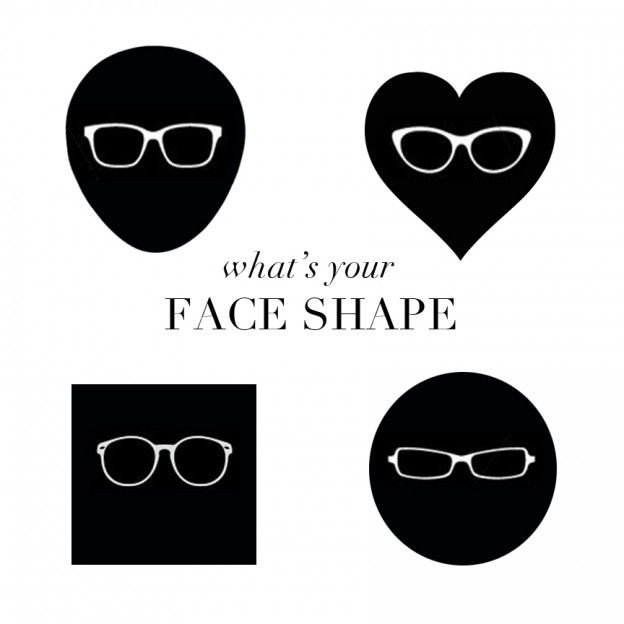
Oval
The most common face shape, ovals are recognizable by their balanced proportions. With high cheekbones and a jawline that is slightly narrower than the forehead, this face shape is known to be one of the most versatile when wearing a variety of differently styled frames.
When picking frames for this face shape, scale is key. Although an oval face can pull off almost any frame shape, it is important that the frame isn’t too big or small for your face as it can throw off the proportions. To contrast the soft curves of your oval face, try square or rectangular frames or shake things up with a fun cat-eye frame.
Round
Round face shapes resemble a circular shape, as the length and width are almost equal. Fuller cheeks, rounder chins and a broader forehead – this face shape is all about soft curves.
Complement the soft lines of your face by creating contrast with some square or rectangular frames. Frames with a slight upsweep at the corners will also look great, bringing focus to your cheeks and attention to your eyes. Choosing a more horizontal than vertical shape will also lengthen the face and widen the eyes. Darker colors and thicker, more angular frames look great and add an element of drama.
Heart
Heart-shaped faces tend to have broader foreheads, higher cheekbones, slimmer jawlines and smaller chins.
This delicate face shape looks best when anchored with square or oval frames that have curved edges. The key to finding the perfect pair for you is to try to balance the various widths of your face. Ensure that the glasses extend further than your forehead to keep proportions in check. Bottom heavy frames like a deeper square frame also look great.
Square
With more angular features, square face shapes are identifiable by symmetry and proportion. The forehead and jawline are the same width and the cheekbones are usually very defined.
Round, oval or butterfly styled glasses will soften the defined angles and bring balance to your overall look. Choosing frames that sit high on the bridge of the nose can work to elongate the appearance of your face, making it appear slimmer. Opting for a subtler, thin, or rimless pair also creates softness and is very complementary.
These four face shapes act as a general guideline and it may not be obvious which one you fit into right away. Pick the shape that sounds most like you and use that as a starting point in your search for the style that fits you best. Regardless of which style you choose, be sure that your eyes are centered within the frames.
Our friendly opticians are here to help you choose the best glasses frames possible. Book an appointment with us and come in for a visit to try on a few different shapes and sizes – there is a great choice for everyone!
Healthy Holiday Foods for Your Eyes
Fall is in full swing and the holiday season is just around the corner. That means holiday parties, family gatherings and tons of delicious food. Celebrate your Thanksgiving with these delicious nutrient-filled fall super foods that are great for your eyes.
Carrots
Your parents weren’t kidding when they told you carrots were good for your eyes. Carrots are a rich source of beta-carotene which our bodies convert into vitamin A, and is essential for the prevention of macular degeneration and senile cataracts. When processed through our liver, vitamin A provides us with rhodopsin, a purple pigment used for night vision. To make carrots a part of your festive season, check out this healthy and delicious Rosemary Roasted Carrots recipe.
Sweet potatoes
With more vitamins and less calories than other potatoes, sweet potatoes have over four times the necessary amount of vitamin A. They also contain vitamins C and E, which are loaded with antioxidants working to protect your eyes from degenerative damage. Sweet potatoes make an excellent addition to your festive table simply baked, fried or roasted.
Broccoli
Although they’re not the most popular vegetables, they are definitely one that your eyes will thank you for. Known for being a good source of vitamins A, C and B6, broccoli is also a great source of lutein, zeaxanthin and sulforaphane. Studies have shown that long-term consumption of these nutrients protect the retina against oxidative damage, the sun’s ultraviolet light and may also reduce the risk of age-related macular degeneration (AMD) and blindness. This Broccoli Cheese Soup will have even the kids at your holiday feasts reaching for seconds.
Pumpkin
This festive classic is as rich in flavor as it is in nutrients. Pumpkins are a valuable source of vitamin A, lutein and antioxidants that are essential in the maintenance of healthy eyes. There are lots of delicious ways to incorporate pumpkin into your diet, but why not treat yourself with a good ol’ pumpkin pie this holiday season.
Apples
As the old saying goes, an apple a day, keeps the doctor away. We know apples are essential for our overall health, but they also play a large role in maintaining healthy eyes. Apples strengthen eyes and improve eyesight through the presence of flavonoids, a powerful antioxidant that improves blood circulation and prevents eye diseases. Phytonutrients found in apples are also beneficial as they reduce free radicals in the eyes, which work to prevent conditions like AMD, glaucoma and cataracts. For a great new way to add apples to your holiday festivities try making these Apple Rings.
Cranberries
Cranberries are a natural fit for any festive table. Not only are they packed with vitamin C, a powerful antioxidant that stops the development of AMD, but they also work to significantly prevent nuclear cataracts. Try making your own cranberry sauce this year!
Have any more questions about how you can better strengthen your eyes? Contact us!